
How to Choose the Right TV Wall Mount (Fixed vs. Tilting vs. Full-Motion)
A practical guide from a Lafayette installer on picking the right TV mount for your wall, your room, and your TV size — plus the mistakes that ruin a install.
Start with the wall, not the TV
Most TV mounting problems in Acadiana homes come down to what's behind the drywall. Wood studs, metal studs, brick fireplaces, and older plaster walls each need different anchors and lag hardware. Before you buy a mount, find out what you're drilling into — a stud finder and a small pilot hole tell you more than any product page.
Over a fireplace looks great in photos, but it puts the screen high and pushes heat toward the panel. If that's the only wall that works for your room, a full-motion mount that pulls out and tilts down is worth the extra cost.
Fixed mounts: flush, clean, and cheap
A fixed mount holds the TV about an inch off the wall. It gives you that built-in look and costs the least, but you lose access behind the screen — which means cables have to be routed before the TV goes up.
- Best for: eye-level walls in living rooms and bedrooms
- Watch out for: no adjustment after install, tight cable access
Tilting mounts: the fix for high screens
A tilting mount angles the screen down 5–15 degrees. That's the difference between glare and a clear picture when the TV sits above a mantel or a dresser. They stay slim against the wall and handle large panels well.
- Best for: TVs mounted above eye level
- Watch out for: buying one rated below your TV's actual weight
Full-motion mounts: flexibility at a price
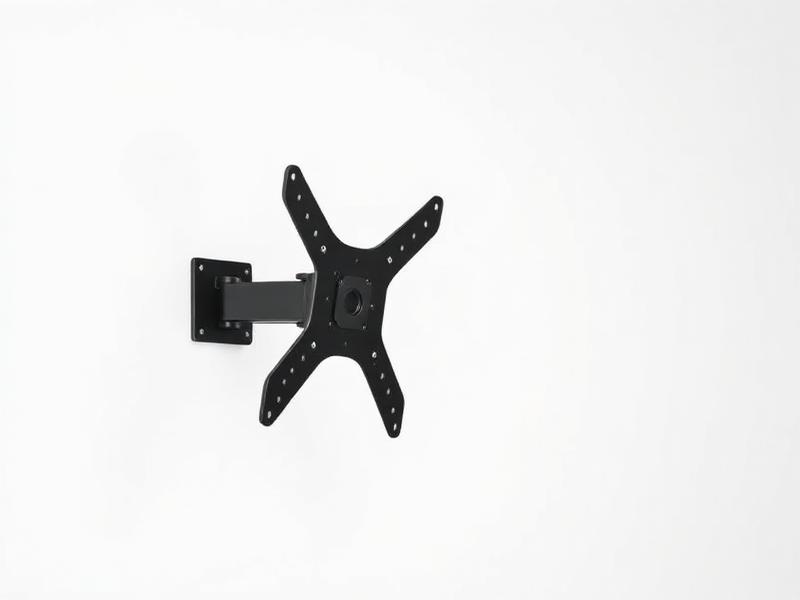
Full-motion (articulating) mounts swivel, extend, and tilt. They're the right call for corner installs, open kitchen-living layouts, and any room where you watch from more than one spot. They need solid stud anchoring — the leverage on an extended arm is significant.
- Best for: corners, kitchens, rooms with multiple seating areas
- Watch out for: cable slack — leave enough for the full range of motion
Get the height right
A simple rule: the center of the screen should sit at seated eye level, usually 40–45 inches off the floor for a living room. Higher than that and you're tilting your neck for two hours. Mark the bracket location with a level and tape before a single hole gets drilled.
Hide the cables
A mounted TV with cords hanging down defeats the purpose. In-wall rated cable pass-throughs are the cleanest solution on drywall; surface raceways painted to match work on brick and tile. Plan the power and HDMI run before mounting — retrofitting is twice the work.
Want it handled?
We mount TVs across Lafayette, Broussard, Youngsville, Scott, and Carencro — including fireplace and brick installs, in-wall cable routing, and soundbar mounting. We can supply the mount or install one you already own.
Need it done right?
We install across Lafayette and surrounding areas, 8am–8pm every day — or shop the gear and do it yourself.